
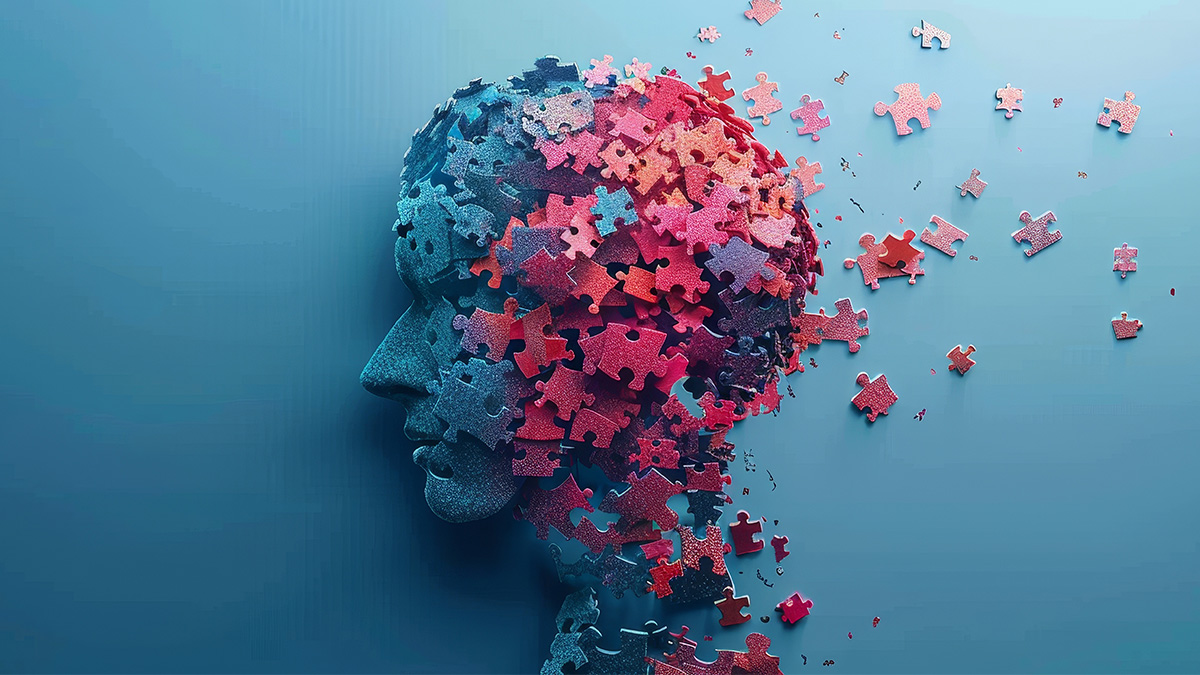
Photo credit: Adobe Photostock
Written by Annemarie Goldstein Jutel, Professor of Health, Te Wāhanga Tātai Hauora, Faculty of Health, Te Herenga Waka, Victoria University of Wellington, New Zealand.
We live in an era of diagnosis. This is not only because we are coming out of—or still in!—a global pandemic, where being able to identify, count and locate cases is a public health imperative. Diagnosis is a source of entertainment, with television shows like Grey’s Anatomy in its twentieth series; House, MD, still a favourite and netflix series The Diagnosis Detectives and Diagnosis garnering huge audiences. Diagnosis is promoted by all manner of industries, from pharmaceutical to fitness, encouraging the public to take self-diagnosis tests: Are you depressed? Overweight? Do you have ADHD? Exczema?
There are also enthralling diagnosis narratives which are both a source of creative expression and of diagnosis awareness. The personal stories that emerge from the diagnostic experience range from the first person illness documentary (Unrest as one poignant example), to cartoons that explore the experience of diagnosis (Depresso, Tangles, Psycho). Diagnosis is also a useful trope in fiction, with films and novels like Still Alice, and even Superman using the diagnostic moment as a turning point which reveals character.
Yet, diagnosis is not just a simple name for a natural fact: it is a classification system. Diagnosis is medicine’s way of categorizing, and it’s important to understand how the categories shape our experiences of health and illness. While illness is a fact of nature, the categories within which illnesses are placed are human creations, and are themselves the product of consensus, power, inequity, and prejudice. Classification systems are highly textured snapshots of the social landscape at a particular point in time. As Emerson wrote in 1837, “…what is classification but the perceiving that these objects are not chaotic, and are not foreign, but have a law which is also the law of the human mind?
From a sociological perspective, understanding how these classification systems work to anchor the healthscape is illuminating, and revealed in intriguing form by The Sociology of Diagnosis: A brief guide.
The diagnosis is both a process and a category. As a category, it is a tangled social web of classification, history, values and consensus. As a process, it is the means by which the label is transferred to an individual case. The process is contingent upon social standing of the participants, professional expectations, traditions, cultural beliefs and so forth. But, both category and process organise the symptoms, provide a sense of direction to the patient, point (hopefully) to a treatment, describe the future (prognosis), allocate resources (sick leave, prescriptions, insurance reimbursement), and even designate a social role. People become their diagnosis—“I am a diabetic”—or get reduced to one—“he’s manic!”
Diagnosis also maintains social order within the health professionals, protecting the authority of medicine over sickness and health, and over other health professionals. Definitions of medical practice are usually anchored in diagnosis. Assessing, diagnosing, and treating are protected activities, defined by the Medical Act in the UK, and similar agencies in other jurisdictions. The power to diagnose, and the prestige and autonomy that goes with this activity incites other professions to attempt to include diagnosis in their scope of practice, with nurse practitioners and physical therapists getting access to little bits of diagnosis, not necessarily without conflict. The American Medical Association warns of “scope of practice creep,” putting its stake in the ground for physician-led diagnosis.
It is not just a differentiation between professions that diagnosis arbitrates. It also differentiates between patient and doctor. A patient may be unwell, and explain their illness as something requiring diagnosis, but to be sick and to be diagnosed are not the same thing. Sickness without diagnosis does not have the same status. The diagnosis authorises sickness. This is what sociologists refer to as the illness-disease dichotomy, where “Illness” refers to being unwell, and “disease” refers to an “authorised” illness: a diagnosis.
Diagnosis is a kind of shorthand. Instead of saying: “I’ve got a metabolic problem that interferes with how I break down proteins and it results in uric acid crystals in my joints” one can say “I’ve got gout!” and the message is transmitted. But with that message, there are also associations. Some are very practical: what is the treatment? What sub-speciality will look after me? What happens next? But there are also broader personal questions. For most diagnoses, there can be social implications associated with character and behaviour, many of which are stigmatising: gout and gluttony, lung cancer and smoking.
But all diagnoses are not stigmatising and a diagnosis can legitimise what might otherwise be seen as socially problematic behaviour or needs. An anaemia can explain a prolonged fatigue, and social lethargy. Relief. “I was afraid it was in my head!” (physical diagnoses are higher on the hierarchy of disease prestige).
As we navigate daily life in western society, diagnosis confronts us via advertisements in the tube, or on the back of buses. On the inside of the door to a public toilet cubicle, there are instructions about the colour of our urine and the possible diagnoses for which one should be on the lookout. At the work lunch table, there are comments like “She’s on the spectrum!” Newspapers, and social media feed report what star or political figure has just gotten a tragic diagnosis. And we use diagnostic terms to refer to our own social settings—manic, depressing—and ourselves.
Understanding the social power of the diagnosis provides us with insights about its use and, its overuse, but most importantly, about how we understand the world.

The Sociology of Diagnosis
A Brief Guide
By Annemarie Goldstein Jutel, Professor of Health, Te Wāhanga Tātai Hauora, Faculty of Health, Te Herenga Waka, Victoria University of Wellington, New Zealand is available now.
Find more information on this title here.
Read the introduction and other free chapters on Elgaronline.


Leave a Reply